The history of radio frequency engineering in Spain is closely intertwined with the School of Telecommunications Engineering (ETSIT) at the Universidad Politécnica de Madrid (UPM). For decades, its classrooms, laboratories, and research groups have educated generations of engineers who have driven advances in telecommunications, radar systems, satellite communications, space technology, and cutting-edge electromagnetic applications.
Many of the professionals who are now recognized leaders in the field began their academic and research careers here, later making significant contributions to industry, research, and technological innovation both in Spain and internationally. Their work has helped lay the foundations of the technologies we rely on every day.
This Master’s program builds on that legacy and carries it into the future. In this section, we pay tribute to some of these pioneers, whose passion for RF engineering, dedication to teaching, and commitment to excellence have inspired generations of students and researchers. Their testimonials reflect not only remarkable professional careers but also the enduring relevance and tremendous potential of a discipline that continues to play a vital role in shaping the technological progress of our society.
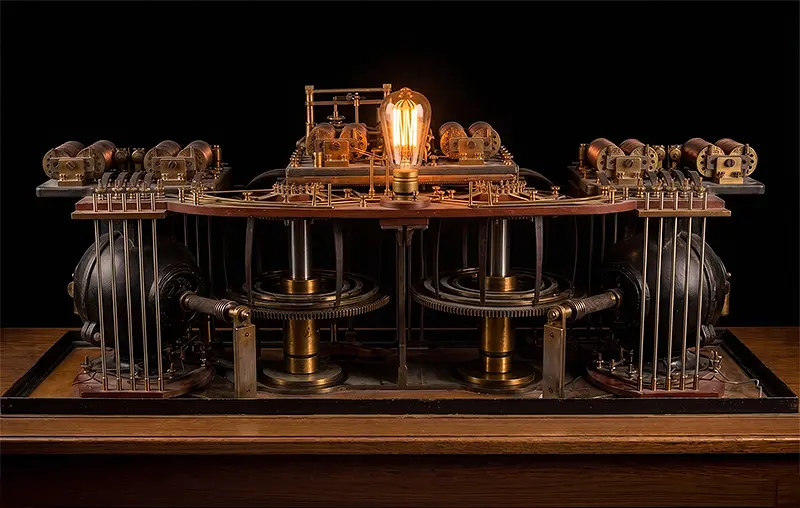
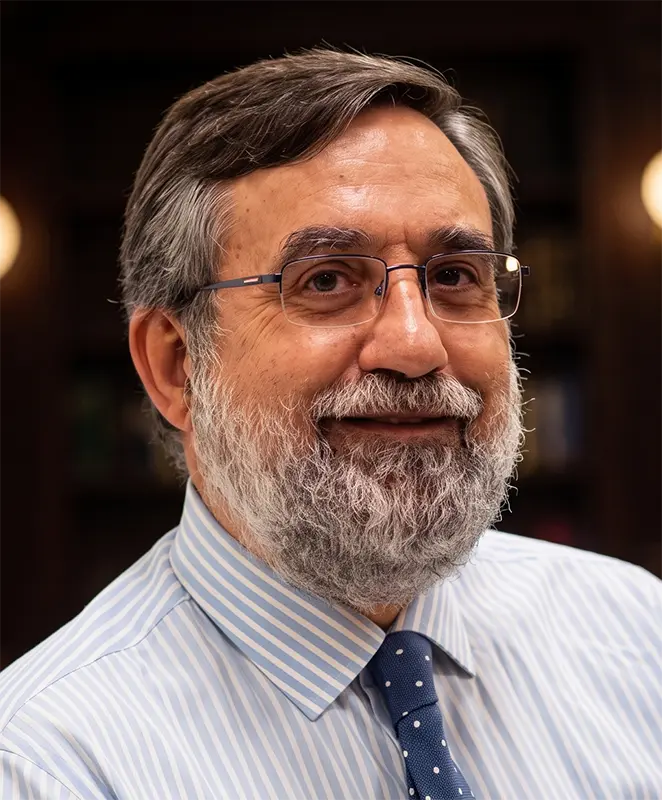
Félix Pérez Martínez
Ph.D. in Telecommunication Engineering from the Universidad Politécnica de Madrid (UPM), awarded in 1982. He served as a Full Professor at the School of Telecommunications Engineering (ETSIT) of UPM from 1989 to 2024 and is currently an Emeritus Professor.
Throughout his career, his professional activity has been devoted to teaching and research in the fields of RF technologies and radar systems.
“After a long professional career in the fields of radio frequency (RF) engineering and radar systems, I can confidently say that RF is one of the most exciting, creative, and innovative areas of engineering. In addition to underpinning many of the technologies that modern society depends on, it is also one of the disciplines offering the greatest opportunities for professional growth.
Mobile communications, satellite systems, radar, navigation, advanced electronics, industrial sensing, and defense applications all share a common need: engineers capable of designing, developing, and validating increasingly sophisticated RF systems. In this context, this Master’s program represents an outstanding opportunity for both professional fulfillment and access to a highly skilled job market with a growing demand for RF specialists.
One of the program’s greatest strengths is the extensive expertise of the departments within the School of Telecommunications Engineering (ETSIT) responsible for its delivery. For more than fifty years, these departments have led pioneering research projects and collaborated closely with industry while educating several generations of engineers who now hold leading positions in companies, technology centers, public institutions, and research organizations. Many of the professionals driving the development of RF, microwave, and communication technologies in Spain today began their careers in these classrooms. This legacy gives the Master’s program a unique combination of academic excellence, practical expertise, and strong connections with industry.
Spain also benefits from a robust industrial ecosystem spanning telecommunications, space, defense, aerospace, and high-tech electronics. Demand for professionals specializing in antennas, microwaves, electromagnetic compatibility, radar, wireless communications, and advanced simulation tools consistently exceeds the available supply.
Choosing this Master’s program means investing in a strategic technological specialization with applications across high-growth, high-investment industries. RF engineering offers an exceptional combination of innovation, employability, and international career prospects, making it one of the disciplines with the brightest future in today’s technological landscape. That is my conviction, and I firmly stand by it.”
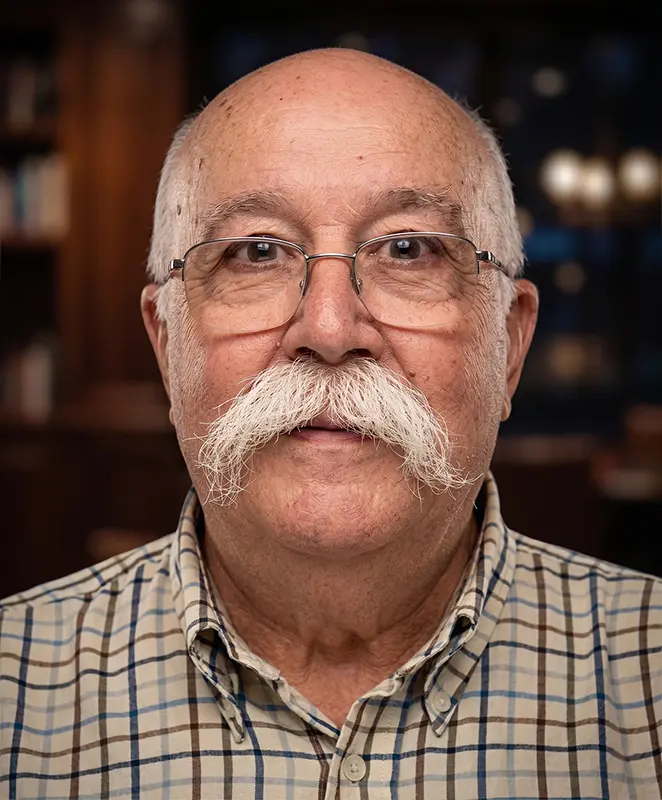
Juan Enrique Page de la Vega
Ph.D. in Telecommunication Engineering from the Universidad Politécnica de Madrid (UPM), awarded in 1974. He served as a Full Professor at the School of Telecommunications Engineering (ETSIT) of UPM from 1983 to 2017.
His research interests include the analysis and design of microwave devices, periodic electromagnetic structures, as well as the teaching of electromagnetic theory and circuit theory.
“When a graduate chooses to pursue a Master’s degree in RF engineering, they are probably thinking of the most attractive career sectors: terrestrial and space communication systems, advanced antennas, or quasi-optical systems. However, I would like to highlight other areas of RF engineering that may not enjoy the same prestige but where applications demand truly imaginative engineering. I am referring to industry and the biomedical sector.
High-power RF is rarely covered in depth at institutions specializing in communications. Beyond the familiar microwave oven (low frequency and low power), few people are aware of the use of high-power microwaves for drying cardboard, ceramics, and even cured hams, or for rock fragmentation (low frequency and high power). These may seem like traditional and unglamorous applications, but there are also more modern ones. Supplying power to a drone through a microwave beam so that it can remain airborne indefinitely—an idea already explored by Tesla—or transmitting solar energy converted into microwaves from a satellite to a rectifying antenna on Earth, as envisioned in the Helios solar power station concept, are both high-frequency, high-power applications that are once again being actively investigated. And, of course, there is also the opportunity to contribute to the Future Circular Collider (FCC) currently planned at CERN. Now that is truly high power!
The biomedical field is already addressed in many bioengineering programs, but it also includes areas that fall squarely within the domain of RF engineering. Altering or suppressing the reproductive behavior of insects using RF, studying the effects of RF on the metabolism of living organisms or their cells, and many other applications belong to the biomedical field while relying heavily on RF engineering. Likewise, intracranial RF hyperthermia is a medical application that requires specialized expertise in RF, particularly extensive multiphysics simulation based on Maxwell’s equations.
In short, we should view RF for what it truly is: an exceptionally broad and versatile field of knowledge. Whatever your interests, you are almost certain to find an area where RF engineering provides the perfect fit.”
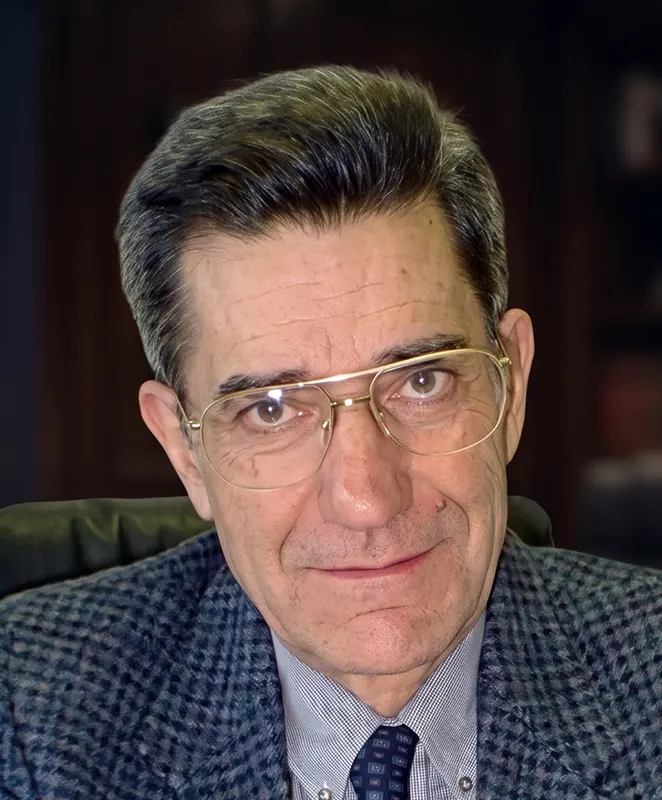
José María Hernando Rábanos
Ph.D. in Telecommunication Engineering from the Universidad Politécnica de Madrid (UPM), awarded in 1970. He served as a Full Professor at the School of Telecommunications Engineering (ETSIT) of UPM from 1976 to 2010 and is currently an Emeritus Professor.
His teaching and research have focused on the field of radio communications, with particular emphasis on mobile communications and other wireless transmission systems.
“As we become increasingly immersed in a digital world, we are often unaware of the technological foundation on which modern applications are built. This is true not only for everyday users but also for many engineers who, accustomed to working with the higher layers of the OSI model, rarely consider the physical layer that underpins everything. And even within that layer, little attention is paid to the hardware itself—the electronic circuits that form the hidden yet essential foundations of the impressive architecture of today’s communication systems and applications.
In particular, for applications involving mobility, whether on Earth or in space, radio technologies are indispensable, as they are the only ones capable of providing ubiquitous connectivity and true mobility. This applies not only to active and passive RF devices but also to the radiating systems that enable the critical interface between ground and air.
More than fifty years ago, the School of Telecommunications Engineering (ETSIT) at the Universidad Politécnica de Madrid (UPM) recognized the enormous potential of this field of applied research. Research groups dedicated to RF technologies, electromagnetic radiation, and radiocommunications were established, producing outstanding scientific and technological achievements. Their defining characteristic has always been the ability to anticipate technological evolution—not merely keeping pace with the state of the art, but looking one step ahead by asking: Where have we come from? Where are we now? And where are we going?
These groups also created a lasting academic legacy. As new Schools of Telecommunications Engineering were established throughout Spain, many developed similar research groups, initially led by former members of the ETSIT-UPM RF teams, who brought with them their expertise and vision. This enabled these new groups to rapidly establish their own research programs and make significant contributions to the field.
Their work has resulted in patented inventions, numerous research and development projects for both national and international companies, and even the creation of technology-based companies such as Radiación y Microondas, which became a national and international benchmark in antenna engineering.
This long-standing tradition provides these research groups with an exceptionally strong technical foundation for continuing their teaching and research activities in the years ahead, particularly in highly promising areas such as advanced 5G and 6G mobile communications, terrestrial and satellite communication systems, Internet of Things (IoT) sensors, and bioengineering.”

Escuela Técnica Superior
de Ingeniería de Telecomunicación
Universidad Politécnica de Madrid
The Master’s degree
Career Opportunities
Quick Links

© 2026 ETSIT UPM. All rights reserved.